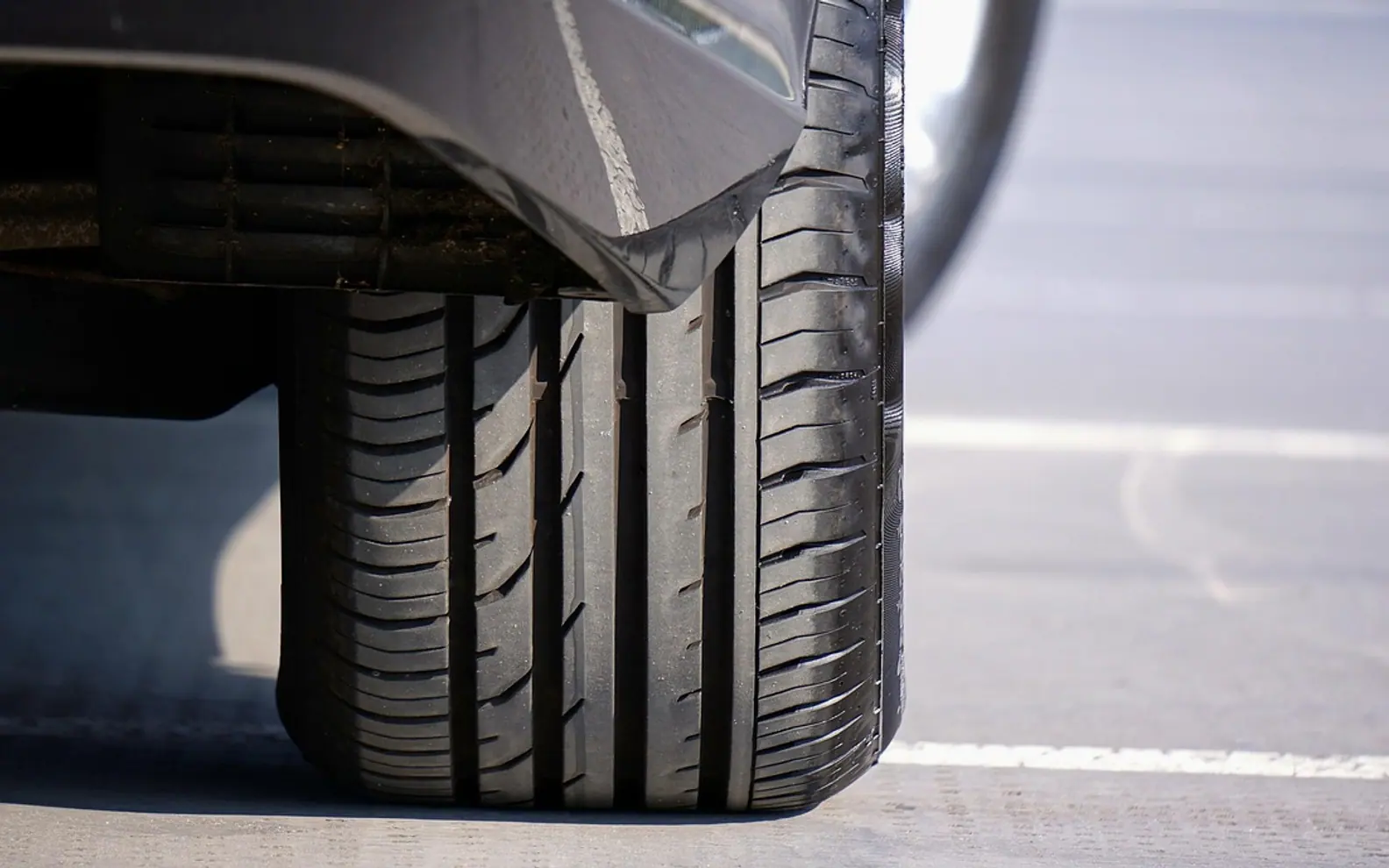
How Often Should You Rotate Your Tires?
Why tires wear unevenly, where to find the rotation interval for your car, which patterns suit front, rear and all-wheel drive, and signs a swap is due.
- Published
- Journey
- 4 min
- Covered here
- 6 sections
- Route
- Cars
Covered here
- Why tires wear at different rates
- Where to find the right interval
- Common rotation patterns
- Signs a rotation is due
- Doing it yourself or using a workshop
- Keep a simple record
Look closely at the four tires on most cars and you will notice they are rarely worn the same way. The fronts may be balder on the shoulders, the rears may look almost new, or one corner may show a pattern all of its own. Rotation, moving each tire to a different position on the car at regular intervals, is the simple fix. The question most drivers ask is how often it needs doing, and the honest answer starts with the car itself.
Why tires wear at different rates
Each corner of a car has a different job. On a front-wheel-drive car the front tires steer, carry the weight of the engine and deliver the power to the road, so they work much harder than the rears. On a rear-wheel-drive car the load is shared differently, and on an all-wheel-drive car the system expects all four tires to be close in size and wear. Cornering, braking, road camber and even the side of the road you usually park on add their own small effects.
Left alone, these differences mean two tires reach the end of their useful life well before the other two. Rotation spreads the work out so the set wears together, which helps grip stay balanced from front to back.
Where to find the right interval
There is no single number that fits every vehicle. The most reliable sources are, in order:
- The owner's manual or service booklet. Manufacturers usually list a rotation interval, often alongside other routine checks, and sometimes a preferred pattern.
- The tire maker's guidance. Some tire warranties expect rotation at stated intervals, and keeping records can matter if you ever need to make a claim.
- Your own wear pattern. If the fronts are wearing visibly faster than the rears between services, rotating a little sooner makes sense.
Many owners find the easiest habit is to pair rotation with another regular job, such as an oil change or a seasonal tire swap, so it is never forgotten.
Common rotation patterns
The right pattern depends on the drivetrain and the type of tire fitted. The broad approaches look like this:
| Car type | Typical approach |
|---|---|
| Front-wheel drive | Fronts move straight back; rears cross over to the opposite front corners. |
| Rear-wheel drive or four-wheel drive | Rears move straight forward; fronts cross over to the opposite rear corners. |
| All-wheel drive | Often an X pattern, with every tire moving diagonally, as the manual allows. |
| Directional tires | Swapped front to back on the same side only, because they must keep rolling the same way. |
| Different sizes front and rear | Usually swapped side to side only, if the wheels allow it at all. |
If the car carries a full-size spare that matches the other four, some patterns bring it into the rotation too. Space-saver spares never join in.
Signs a rotation is due
- Visible difference in tread depth between the front and rear pairs.
- Wear concentrated on the edges or the centre of one pair of tires.
- A humming or droning noise that changes with speed.
- A slight vibration through the steering wheel at motorway or highway speeds.
Some of these signs can also point to alignment, balance or pressure problems, which rotation will not cure. If one tire is wearing on a single edge, have the alignment checked as well. Our guide to tyre maintenance and fuel efficiency explains how pressure and alignment affect wear and running costs.
Doing it yourself or using a workshop
Rotation is within reach of a confident home mechanic with a good jack, axle stands and a torque wrench. The parts that matter most are safety and tightening: never rely on a jack alone to hold the car, and tighten the wheel nuts to the figure in the manual in a star pattern, then check them again after a short drive.
A workshop has the advantage of a lift, which makes it easy to inspect brakes, suspension joints and the inner edges of the tires at the same time. Many will also rebalance the wheels if there is any vibration. Cars with tire pressure sensors may need the system reset or relearned after the wheels move, which some models handle automatically and others do not.
Keep a simple record
Write down the date, the mileage and which pattern was used each time. A note in the glovebox or a line in a phone app is enough. Over a year or two, the record shows whether your tires are wearing evenly, helps with any warranty conversation and makes it easier to plan when a new set will be needed.
Rotation will not make a worn tire safe, and it is no substitute for checking pressures and tread. It simply helps a set of tires age together. If a warning lamp appears on the dashboard while you are thinking about servicing, our explainer on what the check engine light means helps you decide how urgently to act.
Spotted a mistake?
A short note is enough.
What we write about most
Change here for
- Tech Recording, Replay and Catch-Up TV Explained: Ways to Watch Later
- Legal What Does a Notary Do? Stamps, Signatures and Sworn Papers
- Concepts Beating the Clock: Why Bridging Outpaces Bank Loans When Time Matters
- Investments Creating a More Connected Future With Citizenship by Investment for Nigerians